
 Brief24
Supreme Court upholds Trump's order to overhaul mail-in ballots
 axios.com
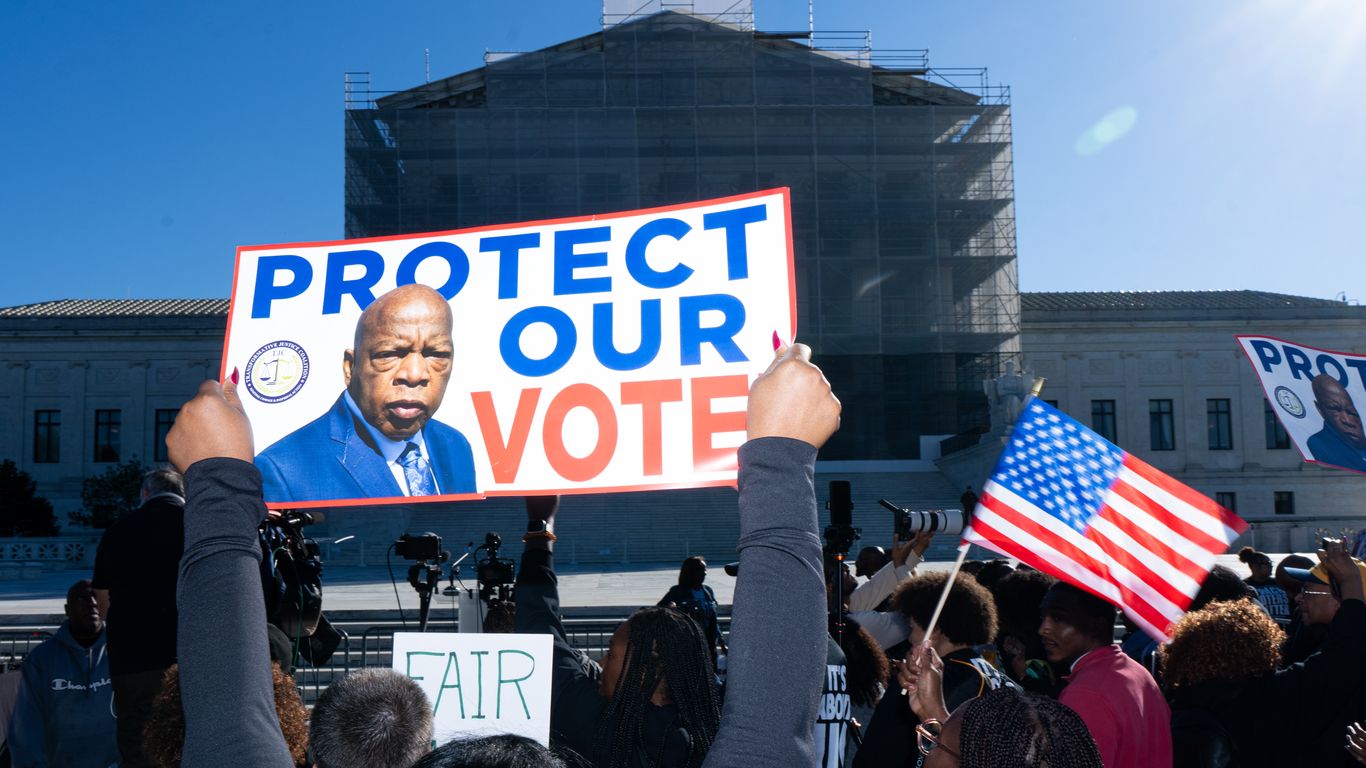
President Trump can implement an executive order restricting mail-in ballots just months before the midterm elections, the Supreme Court said Monday . Why it matters: It's a win for the president, who has opposed mail-in voting for years, but the legal battle is far from over, and the exact impact on November's elections is still unclear. Driving the news: The Supreme Court said in the unsigned order that states lack standing to challenge the executive order because it was an "internal directive" that didn't harm the states that sued. "This internal directive does not regulate the States' voter registration processes," the court's order reads. "Nor does it impinge on the States' authority 'to create and enforce a legal code' for elections." The decision overturns a federal appeals court ruling that found the order could impose "unprecedented levels of involvement by federal officials in how states administer elections" and could confuse and disenfranchise voters. "The Court's disposition of this application does not mean that any measure taken by the Government to implement the Order will necessarily be lawful, the court noted. "On that score, time will tell." The other side: The court's three liberal justices — Ketanji Brown Jackson, Sonya Sotomayor and Elena Kagan — dissented. The decision did not address whether the administration has the authority to implement Trump's order, Sotomayor noted in her dissent, which Kagan joined. Rather, they argued, "today's decision merely postpones adjudication of those challenges." Jackson echoed them, saying the court had "not foreclosed States from challenging this blatantly unconstitutional Order. But it declines to explain when, exactly, is the right time to bring a meritorious election-rule claim challenging unconstitutional interference with electoral processes." Catch up quick: Trump's executive order , issued in March of this year, directed the Department of Homeland Security to compile a list of citizens eligible to vote and called for the U.S. Postal Service to accept ballots only from voters on those lists. Eligible voter rolls constantly change as people move, die, turn 18 or change their names. A national list would quickly become outdated, according to voting rights groups. A coalition of Democratic state attorneys general challenged the order. Between the lines: Under the Constitution , states — not the president — administer elections. Congress does have the authority to pass legislation that alters election rules. Government reports and voting rights groups have consistently found voter fraud is rare and, when it occurs, is not widespread enough to affect election outcomes. What we're watching: Trump has repeatedly pressured Congress to pass the SAVE America Act , which would impose stricter voting rules. The bill would not end mail-in voting and faces an uphill climb in Congress. Senate Majority Leader John Thune (R-S.D.) has repeatedly said it lacks the support to pass. Editor's note: This story has been updated throughout with additional information. Go deeper: Thune's shield against Trump